

After more than 35 years in the markets, I can say I’m feeling déjà vu twice over which is defined as a feeling of having already experienced the present situation. In February if you paid attention to financial news, it sounded like artificial intelligence is about to wipe out the entire software industry and more. I don’t believe that — and I don’t think history supports it either.
We’ve seen this kind of fear before. Heck I’d say the markets reflect more like a line from one of my favorite comedians, Stephen Wright, who said “Right now I’m having amnesia and Deja vu at the same time… I think I’ve forgotten this before.”
First feeling: the announced death of Software
When the internet first became popular in the late 1990s, many thought established companies were finished. Instead, businesses adjusted and grew even bigger.
Later, when businesses started moving their programs and data online (to the cloud), people again predicted the end for traditional software firms. Yet software demand and business grew immensely
AI is the latest revolutionary change, and change seems scary at first, but change doesn’t automatically mean collapse. Yes, simple computer programs/software that just do repetitive tasks should be scared; many of those may become cheaper or easier to replace. But many businesses rely on software to manage customer information, protect sensitive data and guard who can access it, and keep daily operations running smoothly. AI can actually make those systems smarter and more helpful. It can sort information faster, spot problems earlier, and improve decision-making. That doesn’t make the software useless — it often makes it more valuable. Make no mistake there will be companies that benefit from this and as well some that will be harmed by this.
Think of it this way: when washing machines were invented, they didn’t eliminate the need for clean clothes. They made the process better and faster. AI is more likely to improve how software works than eliminate it altogether.
When investors get nervous, they often sell first and ask questions later. Good companies can get pulled down along with weaker ones. For long-term investors, that kind of fear can create opportunity. History has shown that big technological changes usually expand possibilities — they don’t destroy them. AI may reshape software, but it’s far more likely to make it stronger than to make it disappear.
Second feeling of Déjà vu: Market panic over Iran
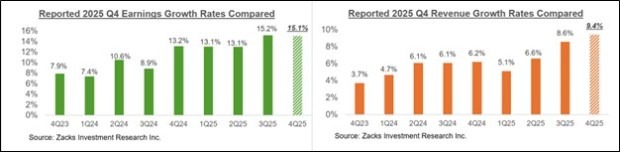
In may last few Market Updates I repeated my warning that “While I think there could be a sell-off swift and temporary like March (2025), I believe it will be to a much lesser extent barring some major geo-political surprise. So it may be prudent to take some gains from the recent strong rally. This does not mean sell your winners blindly, rather like cutting off unfruitful branches on an apple tree and pruning those that are fruitful to make the whole (portfolio) more fruitful. I remain confident in my outlook due to the tailwinds for stocks still in place: interest rates bound in a tight range, many corporate earnings forecasts continue to be solid, and inflation has stay stable and cash flows remain generally robust.” First, I don’t see the Iran conflict as a geo-political surprise. While the actual hour of the initial attack was not known, the idea of an attack was a heavily telegraphed US action with troop movements and public speeches. Now a surprise would be if China should directly support Iran with overt material and troops, which I don’t expect, nor do we see any evidence to consider it a probability instead of simply a possibility. Meanwhile, we continue to see many market leaders reporting revenue and earnings ahead of expectations and raising their forecasts for future growth as evidenced by ZACKS Investment Research earnings scorecard below saying : “Through Friday, February 27th, we have seen Q4 results from 481 S&P 500 members, or 96.2% of the index’s total membership. Total earnings for these companies are up +15.1% from the same period last year on +9.4% higher revenues, with 74.8% beating EPS estimates and 73.4% beating revenue estimates:”
As Argus Research said in their Market Movers note 3/3/26: “…another war in the Middle East. We have seen this story play out too many times, sometimes ending quickly and other times not so quickly.”
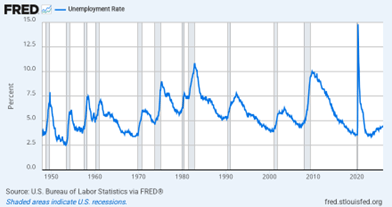
Look at this recent chart form the St. Louis Federal Reserve Bank. Per Argus Market Watch note 3/3/26: “The four-week moving average of 220,000 claims is far below the 300,000 that would raise a warning.”
So yes, it’s déjà vu to me again. We are in the midst of a global infrastructure buildout on a scale we have not seen since the end of WWII with the rebuilding of much of the world and the US highway expansion. Bottomline at this point, this sell-off seems to me more a change in sentiment than a fundamentals. So let me say again: “when the next big sell-off comes (a sale), remember this idea of so many proposed data-center projects to shop during the sale. I don’t know the future, but I can see “miles and miles and miles” of spending ahead. “ I believe this current sell off is presenting a very attractive opportunity to invest in companies leading and benefiting from this AI revolutionary change.
If you’d like to discuss this more and/or learn more about my outlook and how I’m strategically building account portfolios towards this regard, please contact me at your convenience. As always, we invite you to contact us with your questions about the markets and your portfolio.
The S&P 500 Index is a widely recognized index including a representative sample of 500 leading companies in leading sectors of the U.S. economy. Indexes are unmanaged. Investors cannot invest directly into indexes. Past performance does not guarantee future results. All historical market data referenced above was obtained from S&P Global (www.spglobal.com) Opinions expressed are that of the author and are not endorsed by the named broker/dealer or its affiliates. All information herein has been prepared solely for informational purposes and should not be considered legal or tax advice. It is not an offer to buy, sell, or a solicitation of an offer to buy or sell any security or instrument to participate in any particular trading strategy and is not intended to provide, & should not be relied on for, tax, legal or accounting advice. You should consult your own tax professional regarding your specific situation. Past performance does not guarantee future results. Certain statements contained within are forward-looking statements including, but not limited to, statements that are predictions of future events, trends, plans or objectives. Undue reliance should not be placed on such statements because, by their nature, they are subject to known and unknown risks and uncertainties. Oxford Retirement Advisors is an independent firm with Securities and Advisory services offered through Madison Avenue Securities, LLC (“MAS”), member FINRA/SIPC and a Registered Investment Advisor. Oxford Retirement Advisors and MAS are not affiliated entities.